
Creating Jobs: A New Chapter in American Distilling
This post was written before Recognition to Revenue (September 2026). Cite the working paper, not this page, as the current statement of the campaign.
American brandy and rum are older than bourbon, yet they still sit outside the kind of recognition that turns a spirit into an industry people can find. Kentucky did not invent that lesson — a named product and a trail visitors can actually follow. AMBRu is asking whether American Brandy and American Rum deserve the same conversation, not claiming the same boom. What follows is the comparable, not a forecast.
A Legacy That Builds Communities
American brandy and rum are not just drinks; they’re testaments to the ingenuity and resilience of early American settlers. From Georgia’s “illegal” stills in the 1730s—defying British import bans—to the orchards and sugar cane fields that fueled production, these spirits have a story worth telling.
AMBRu’s mission is a shared designation for American Brandy and American Rum—spirits made in the United States, with a name and a quality producers will stand behind. This isn’t just about pride. It’s about a framework people can find: stills, farms, and a trail, at home and on the global map. We want that designation. We want it together.
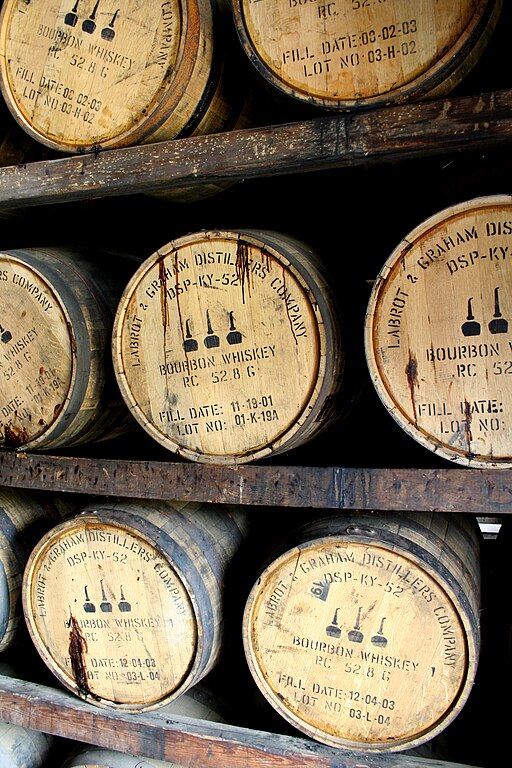
When a spirit gains protected status, it opens doors for growth. Take Kentucky’s bourbon industry as a prime example. Since bourbon was federally recognized as a distinctly US American product in 1964, it has transformed into a $9 billion economic powerhouse. In 2023 alone, it supported over 23,100 jobs with a payroll exceeding $1.63 billion, according to the Kentucky Distillers’ Association (KDA).
Agriculture Across the Chain
Brandy starts in orchards and vineyards. Rum starts in cane and molasses. That is the supply chain — growers, haulers, stills — not a hiring plan AMBRu can promise.
Kentucky’s distillers bought more than 12.75 million bushels of corn from local farmers in 2020. That is what a named product already does for agriculture. It is a parallel, not a projection.
Georgia has orchards, vineyards, and cane memory. So do California and a dozen other states. One American Brandy & Rum Trail would follow that geography. It would not be two branded trails, and it would not be a Georgia project that the rest of the country joins later.
Distilling and Manufacturing
Kentucky’s licensed distilleries went from a handful after the crash to 125 distilleries in 45 counties — the most since Repeal, per the Kentucky Distillers’ Association’s 2026 economic report. That industry now supports about 23,900 jobs and $10.6 billion a year in statewide impact. Those are bourbon’s numbers, for a spirit that already has a name.
American brandy and rum stills exist now — craft rooms, farm distilleries, places already making fruit and cane spirits. Recognition does not conjure plants. It makes the ones that exist easier to find, teach, and visit. Whether new stills follow is a producer decision, not a campaign forecast.
Tourism and Hospitality
The Kentucky Bourbon Trail drew a record 2.7 million visitors in 2024 and held that number in 2025. Most are not local: about 80 percent come from outside Kentucky, typically stay three to five days, and spend $600 to $1,400 a trip (KDA).
That is what a map does for a named category. AMBRu is publishing the idea of one American Brandy & Rum Trail, not two, and not a destination branded on Georgia’s foothills or coast. If people can find the stills, hospitality around them has something to work with. That is the comparable. It is not a visitor count AMBRu is booking.
[1] Kentucky Distillers’ Association, The Economic and Fiscal Impacts of Kentucky’s Distilled Spirits Industry, 2024–2025 (February 2026): $10.6 billion impact; 23,935 jobs; 125 licensed distilleries.
[2] KDA / Kentucky Bourbon Trail, April 2025 and April 2026: 2.7 million visitors in 2024 (record) and 2.7 million in 2025; trip spend $600–$1,400; majority from out of state.
What Kentucky’s Numbers Actually Show
These are the Kentucky Distillers’ Association’s figures. They describe bourbon. They are not a hiring plan for brandy and rum.
Direct employment. In 2024, Kentucky distilleries supported about 7,800 jobs on site — part of 23,900 jobs statewide, with $2 billion in pay and benefits (KDA, February 2026). High wages follow a named product with plants already running. They do not transfer on paper to another category.
Tourism. The Kentucky Bourbon Trail set a record 2.7 million visitors in 2024 and held that number in 2025. That traffic is why hospitality around the stills has work. AMBRu is publishing one American Brandy & Rum Trail — not two routes out of Atlanta, and not a claim those visitor numbers will repeat.
Taxes. Kentucky distilling generated $372 million in state and local taxes in the latest KDA study. That is bourbon’s fiscal footprint. AMBRu does not forecast a tax haul for brandy and rum.
Kentucky shows what a distinctive U.S. product with a map can support. It does not show what AMBRu will hire.
[1] KDA, Economic and Fiscal Impacts of Kentucky’s Distilled Spirits Industry, 2024–2025 (February 2026): 7,844 direct distillery-facility jobs; 23,935 total jobs; $2 billion labor income; $372 million state and local tax; $10.6 billion impact.
[2] KDA / Kentucky Bourbon Trail (April 2025, April 2026): 2.7 million visitors in 2024 and in 2025.
Georgia’s Chapter
Georgia has a real distilling story. During the 1734–1742 ban on rum and brandy imports, settlers made their own. The orchards are still there. So is cane memory. Gilmer County’s vineyards sit in a belt of fruit country that is easy to miss if you only look at Kentucky.
That is why Georgia belongs on a national map — not why it owns the map. House of Applejay in East Ellijay is a producer in this conversation. It is not the hometown of American Brandy or American Rum, and it does not run two branded trails out of the mountains and the coast. One American Brandy & Rum Trail would include Georgia because the history is already here. A name that only works in one state is not a national product identity.
Kentucky’s distilling impact went from about $4.3 billion in 2009 to $9 billion in 2023, and the latest KDA study puts it at $10.6 billion. Those are bourbon’s figures. They are not a multiple AMBRu applies to Georgia, and they are not a headcount for a still that does not exist yet.
A Future You Can Find on a Map
American brandy and rum do not need to become bourbon. They need to be findable as themselves — older spirits, still without a name that does the work a name is supposed to do.
Kentucky is the comparable, not the target. A $10.6 billion industry, about 23,900 jobs, 2.7 million trail visitors: that is what a distinctive U.S. product with a map already supports. AMBRu is not booking those figures for brandy and rum, and it is not hiring from this page.
The work is simpler. Put the history in public. Ask whether these spirits should be recognized as distinctive products of the United States. Build the idea of one trail no single company owns. If that conversation holds, orchards, stills, and tasting rooms have something to stand on. If it doesn’t, no toast will invent it.
Raise a glass to the spirits. The campaign is only the invitation.

Author: caro
Caroline Porsiel is co-founder of the AMBRu Campaign and author of the Recognition to Revenue framework, working to advance recognition of American Brandy and American Rum and build a national American Brandy & Rum Trail.